
2021-2025
︎ Kyoto Sukiya 001#︎ Kyoto Machiya 001#
︎ Kamogawa House
︎ Fengyuan Art Museum
︎Zhuhai Office Building
︎ Hangzhou Guest house︎ Landmark Buildings of Quzhou
︎ An Apartment in Guiyang
︎ Boutique hotel in Inner Mongolia
︎ Shenzhen Commune
︎ Slow Yard
︎ sanga Restaurant
︎ D Apartment
2016-2020
︎ Narrative Space
︎ Deck Apartment
︎ Shen Zhen School 001
︎ DJI︎ Community Library
︎ West Kowloon Pavilion
︎ AN+ Museum
︎ SONGTA Space
︎
Mountain House
OBJECTS
︎
Foldable Table
︎
Steltman
Chair
︎
TodaymoodZhuhai Office Building
DESCRIPTION
In
architectural discourse, regionalism is no longer a novel concept. For
small-scale projects, increasing numbers of architects strive to interpret
locality. Yet for large urban developments, especially high-rises, regional
identity often seems inherently suppressed. Most designs still place their
focus on being formally innovative with the aid of evolving curtain wall
technologies.
Such
form-driven approaches strip architecture of authenticity, allowing buildings
to be placed anywhere without context. The highest objective of being iconic
statements, mask hollow design logic and capital-driven agendas. This rigid
separation of "bones" and "skin" subtly regresses modernism
into classical formalism, reducing architecture to ornamented objects with
costly exteriors—disconnected from their sites and internal functions.
An
Honest Concrete High-Rise
Located
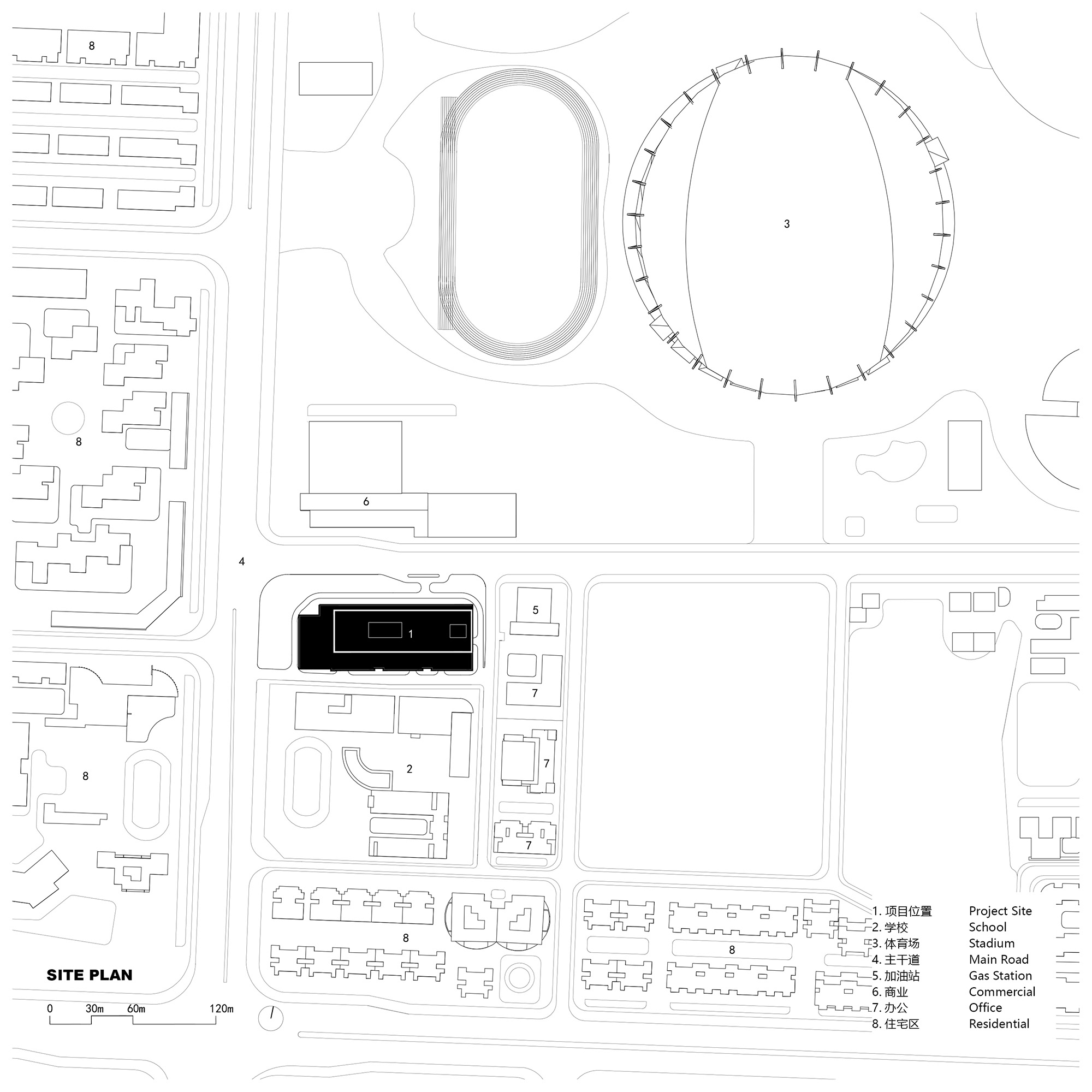
in Xiangzhou District, Zhuhai, the project serves as an office headquarters for
a design institute, with rental workspaces and a public parking tower. The
design seeks to embody academic rigor and creativity, distinguishing itself
from conventional commercial offices. Zhuhai’s subtropical climate—22°C annual
average temperature, 2,000mm yearly rainfall, abundant sunshine—demands a
response that liberates occupants from sealed air-conditioned boxes,
reconnecting people with nature.
We
believe timeless architecture must be honest: stripped of superficial
decoration, expressed through authentic structural language. Concrete, as a
widely used material, inherently conveys sculptural solidity. Over time, its
weathered texture evokes historical resonance. To balance refinement and
practicality, fair-faced concrete became the primary material—a bold choice for
a 100-meter-high structure, realized through the client’s unwavering support.
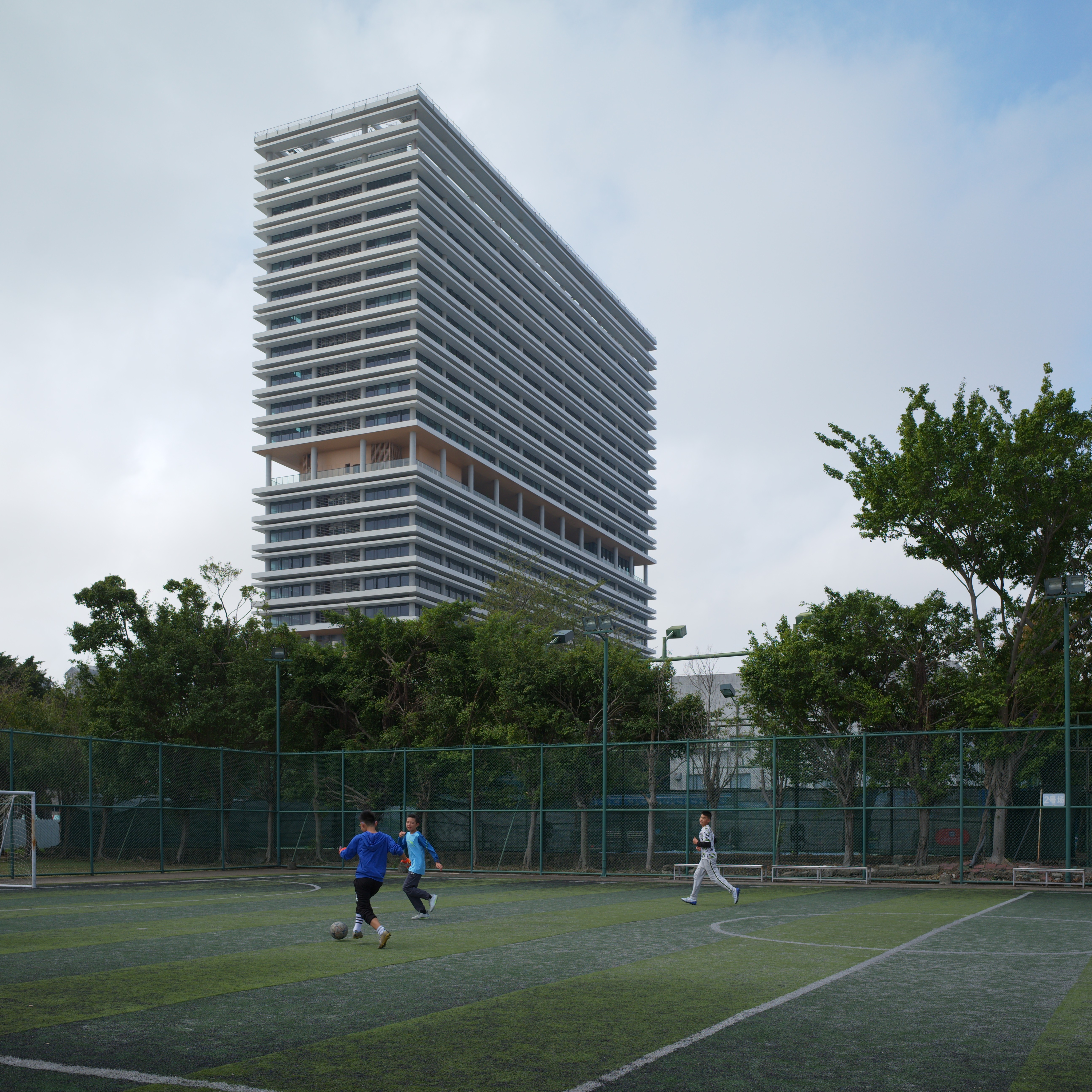
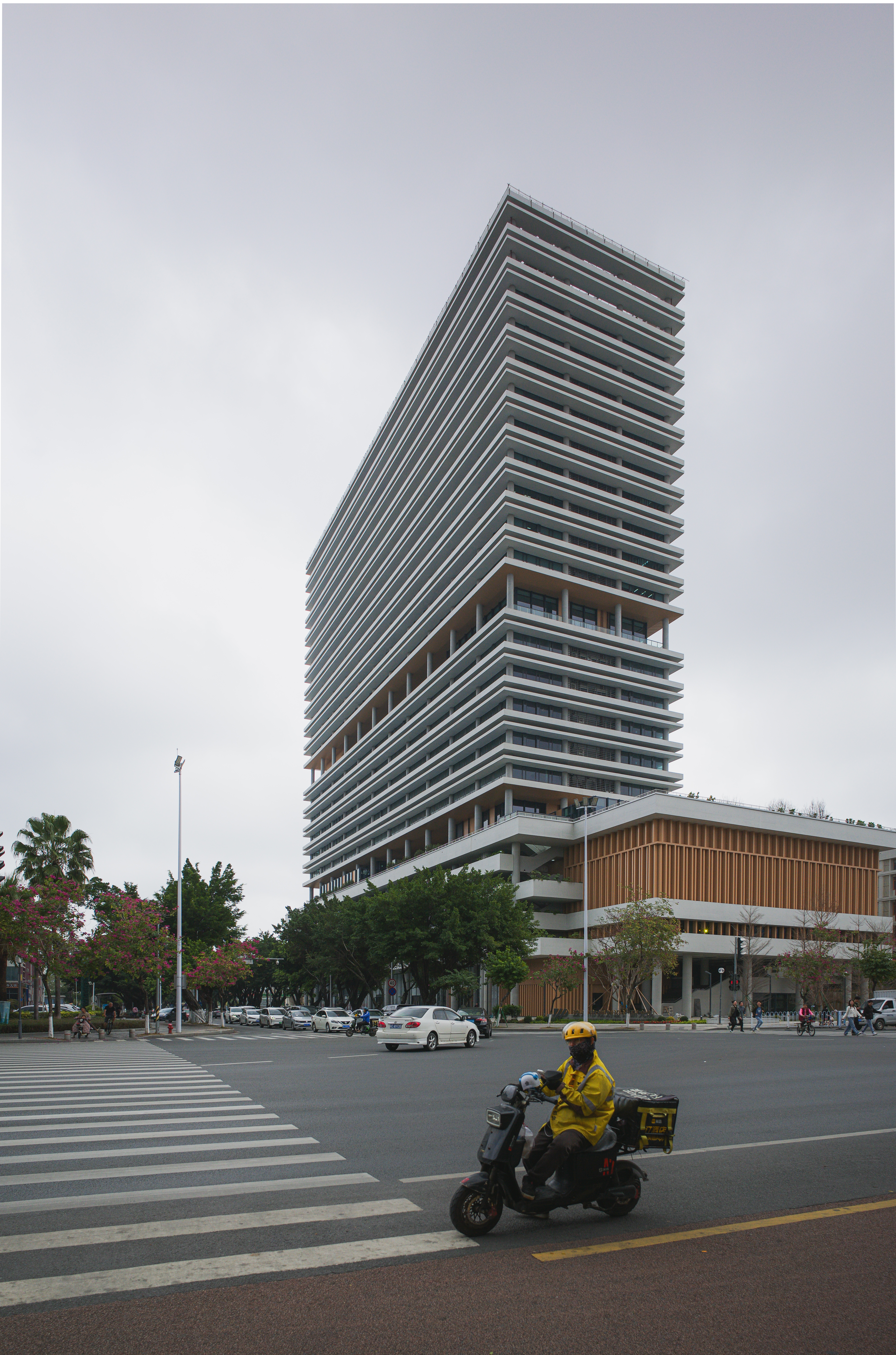
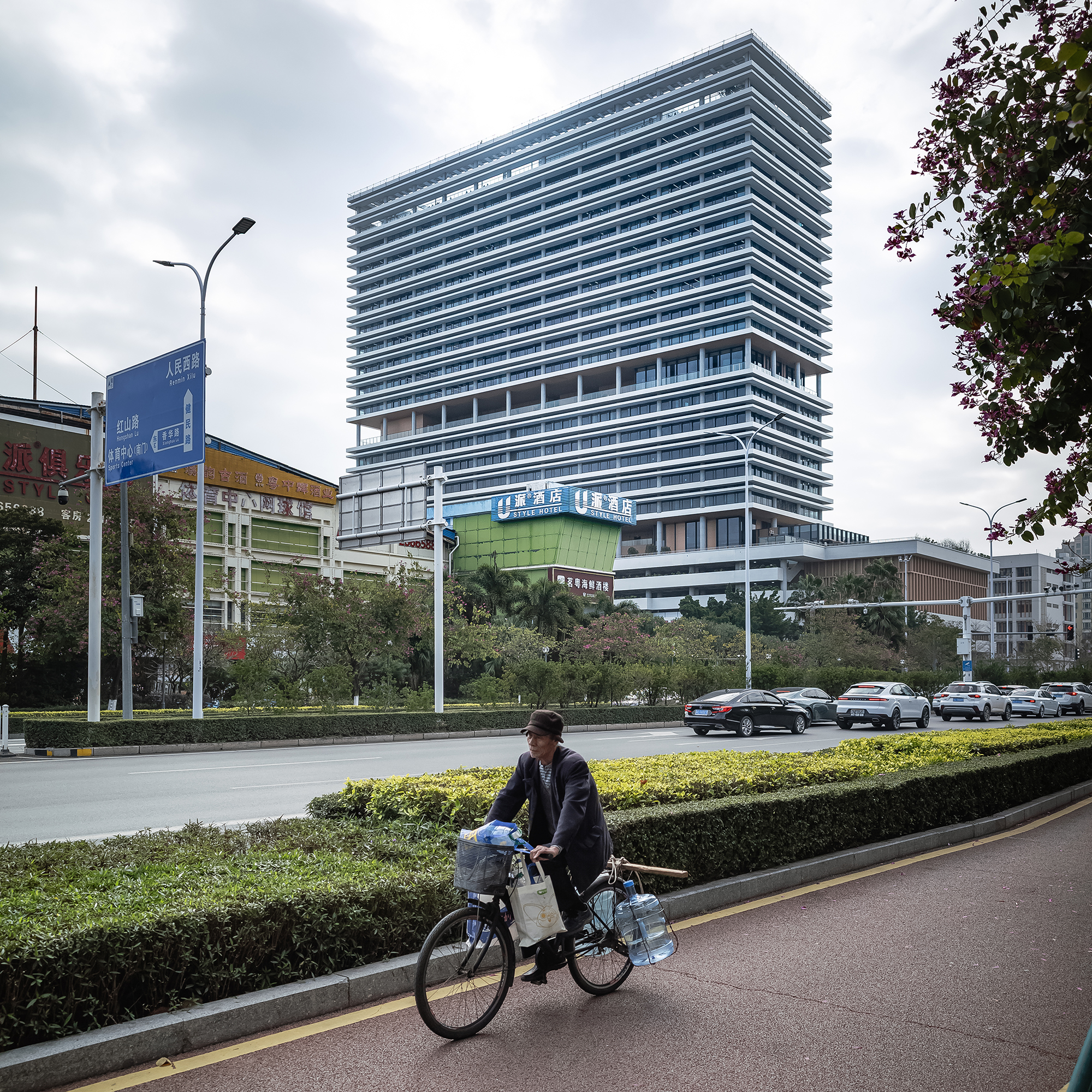
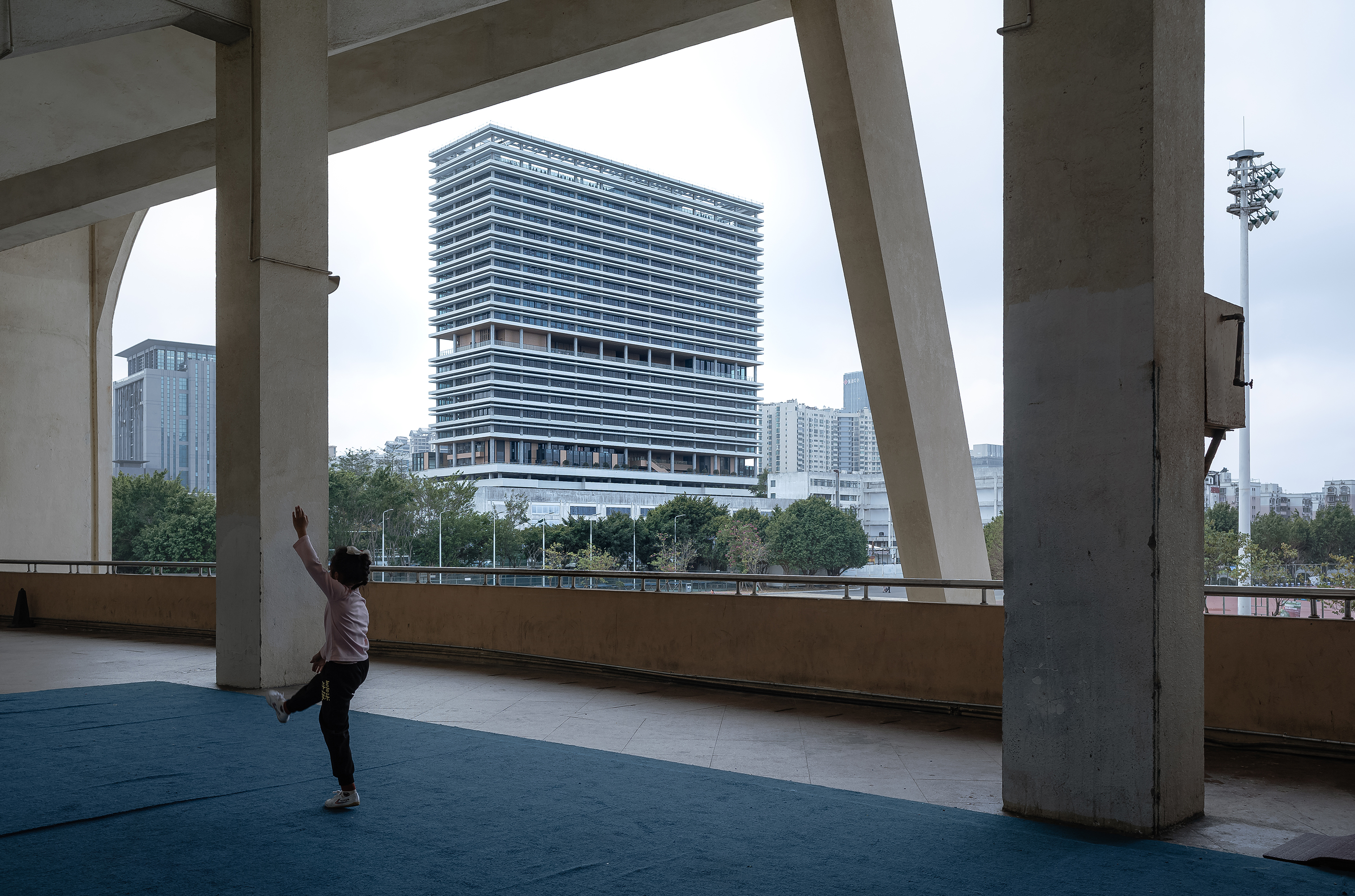
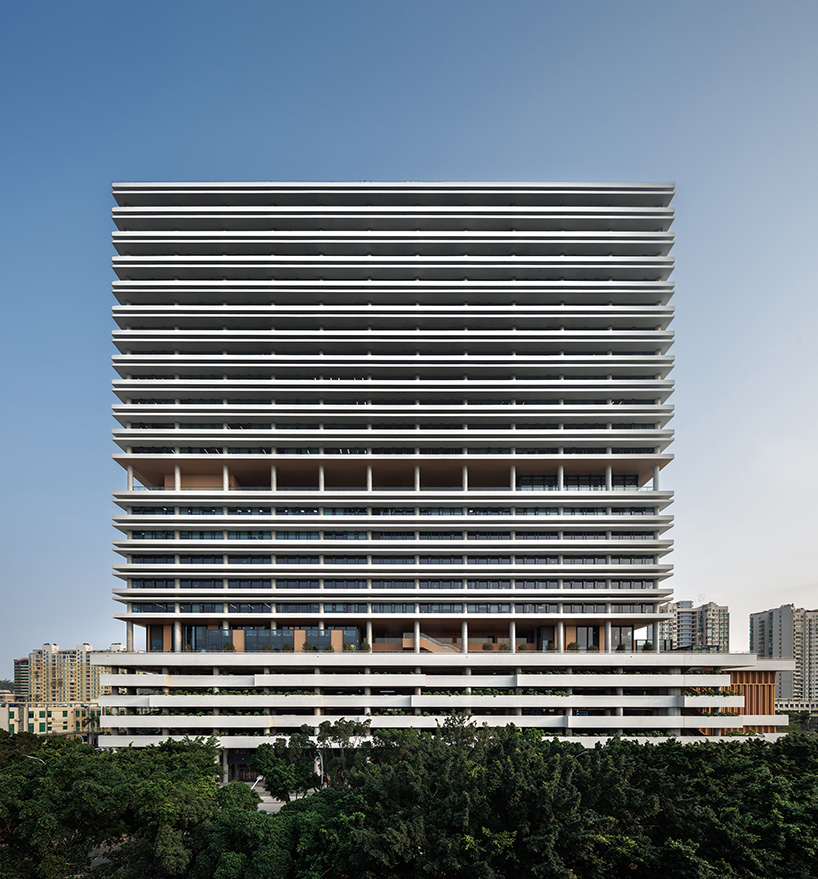
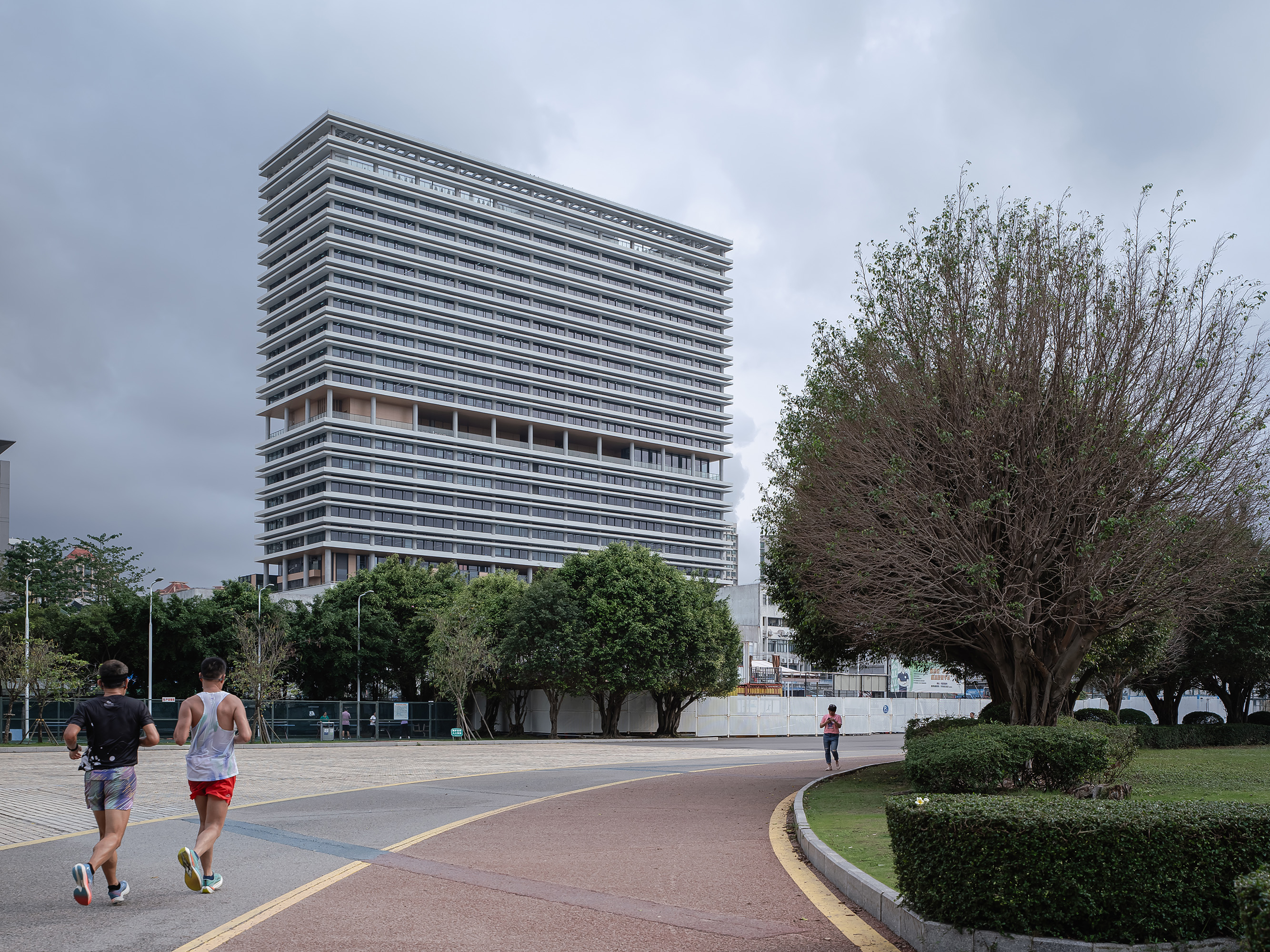
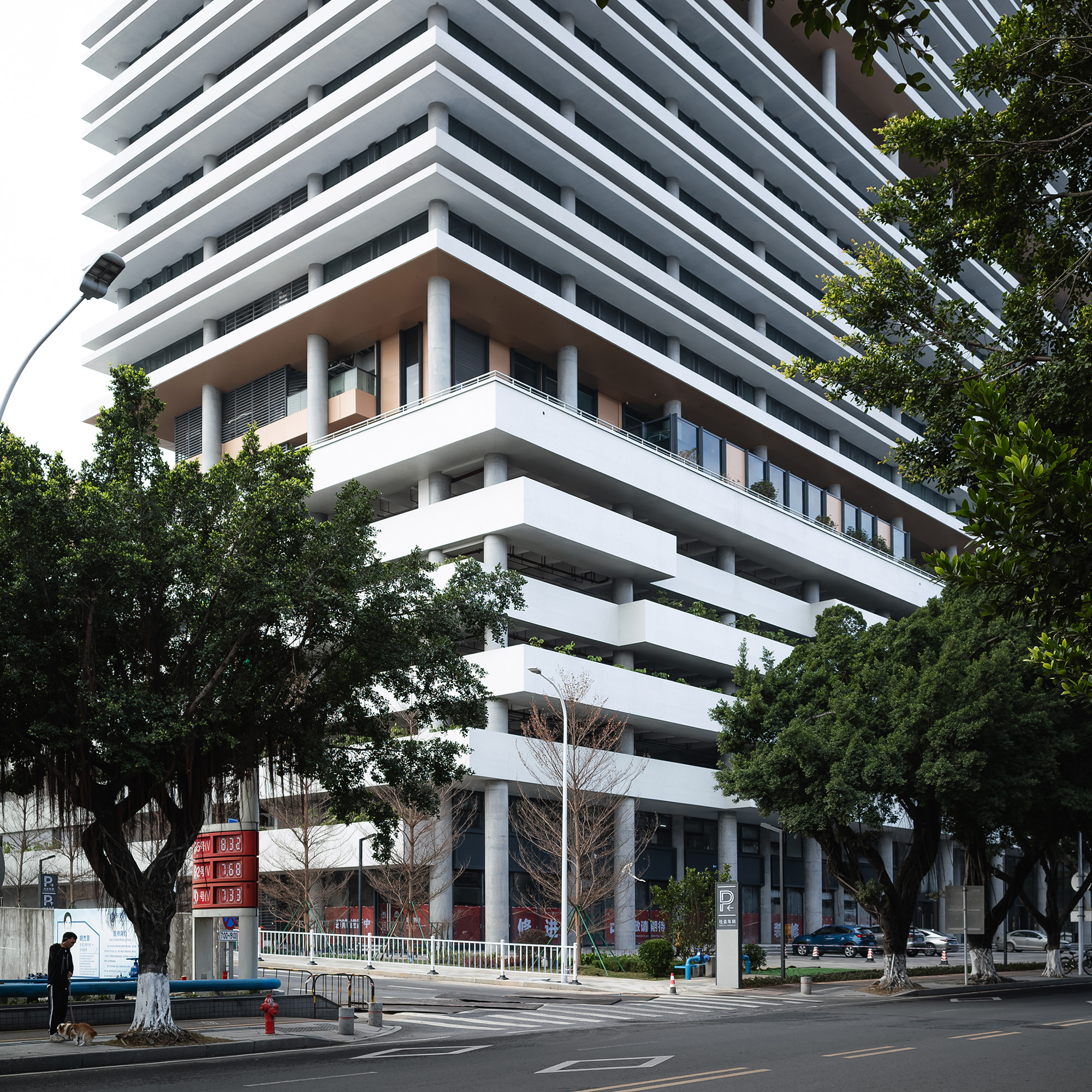
The
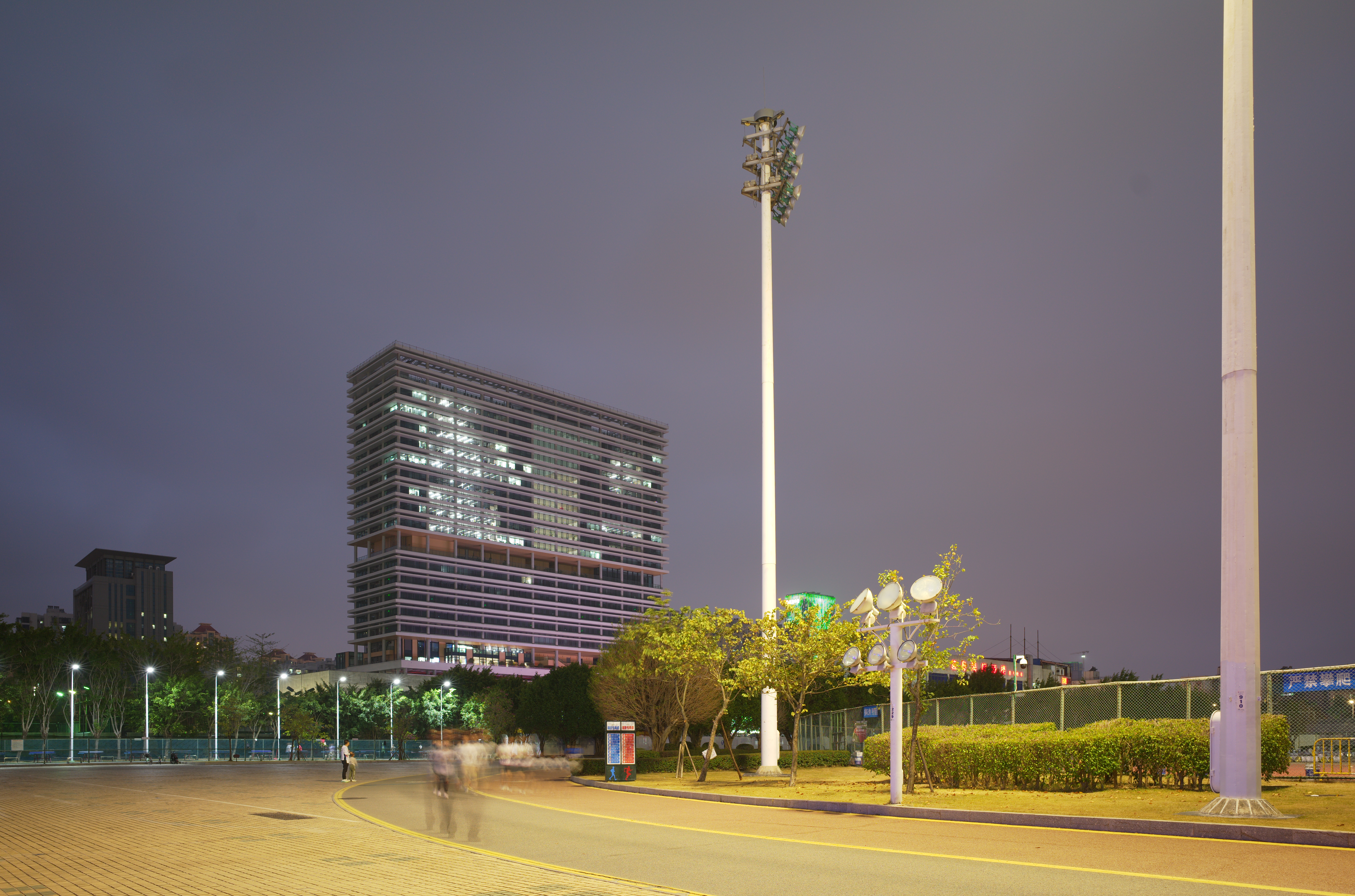
building measures 96m (length) × 27m (width) × 99.8m (height), with a
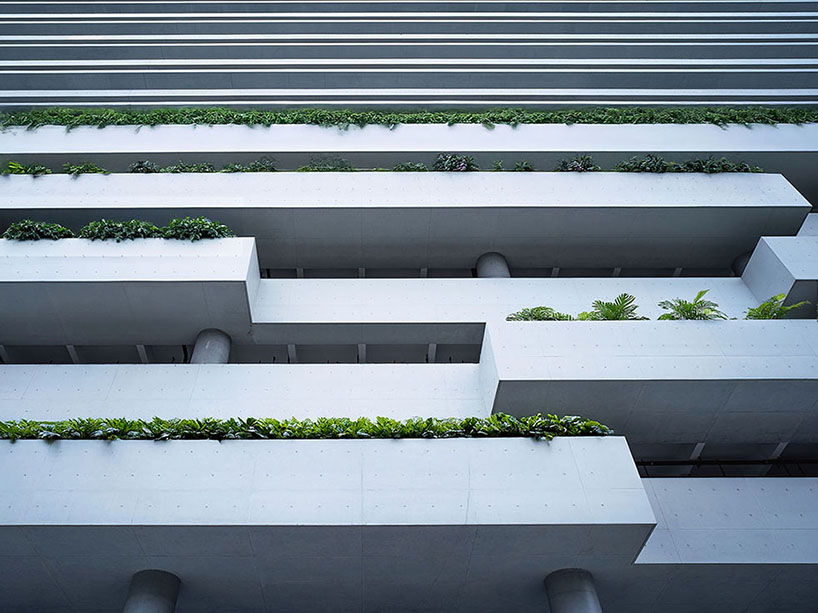
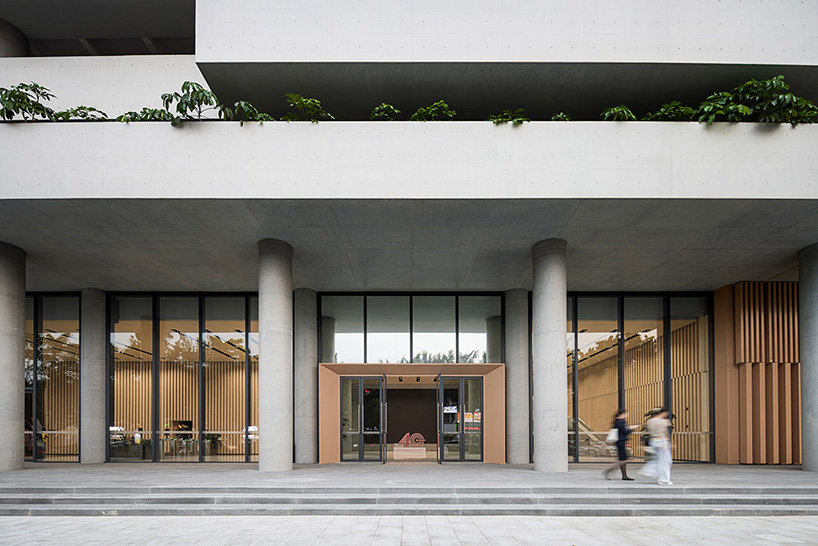
near-square elevation. Horizontal sunshades and tree planters as a façade language unifies the main tower and podium,
responding to both internal functions and urban context.
Vertical
Slab vs. Twin Towers
Initially
envisioned as a twin-tower complex (one for self-use, one for leasing), this
conventional approach risked inefficient layouts and visual conflicts between
towers. Our alternative—a single vertical slab—optimized spatial efficiency
while integrating public amenities.
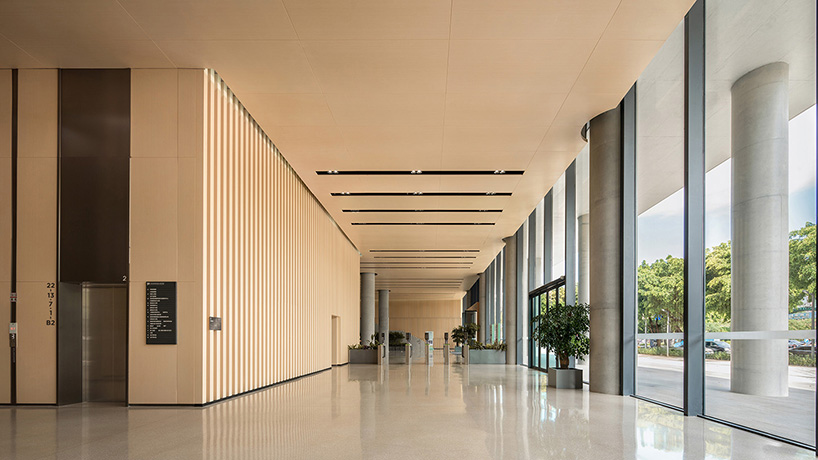
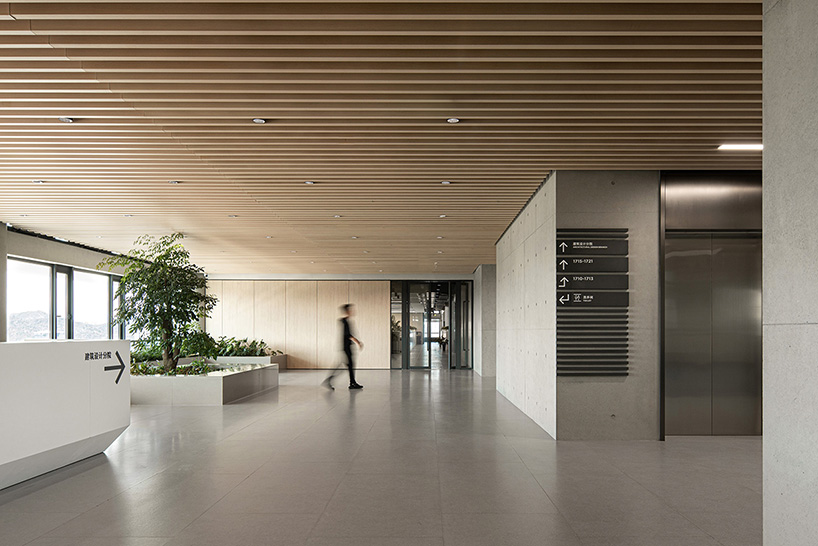
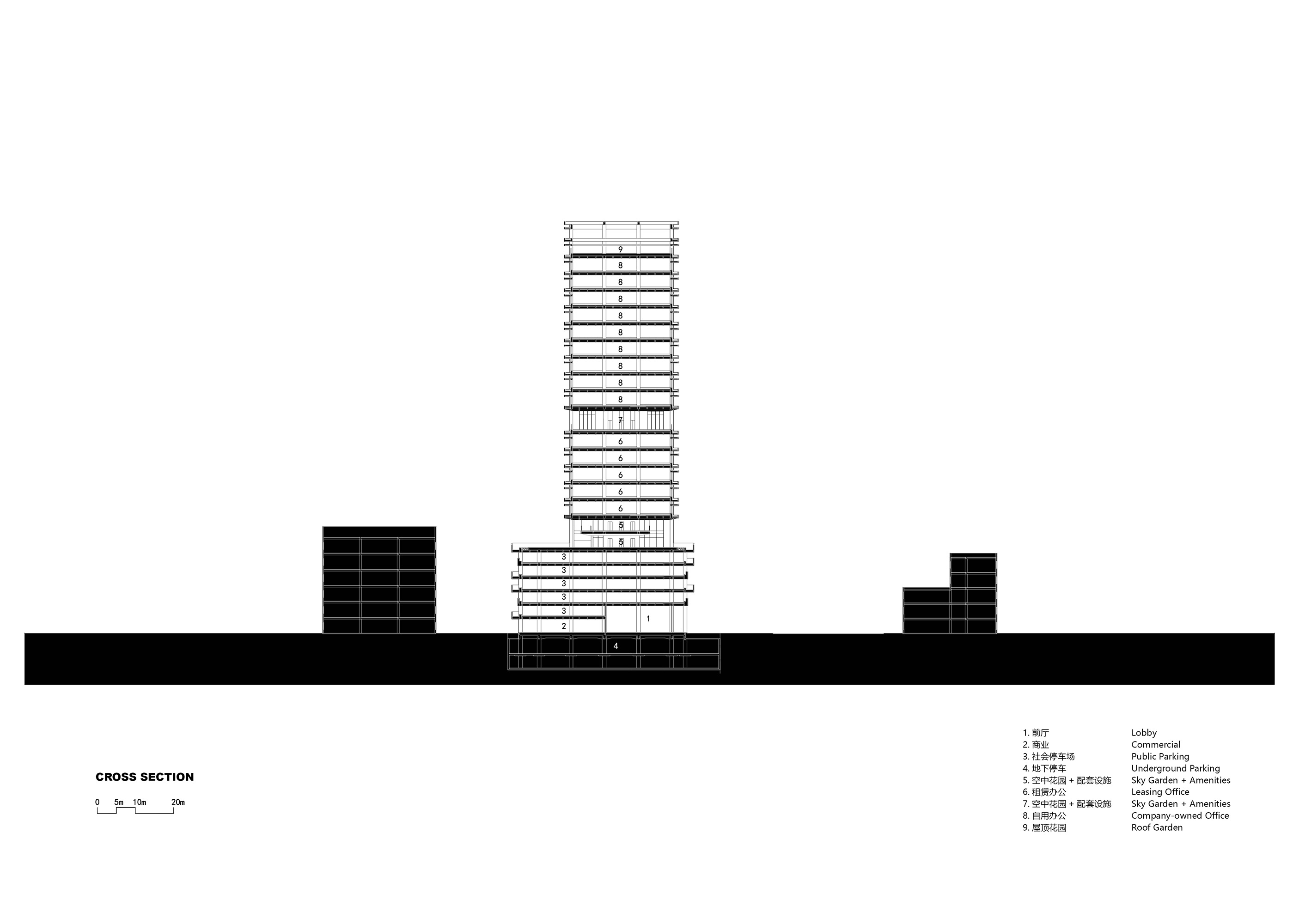
Programs
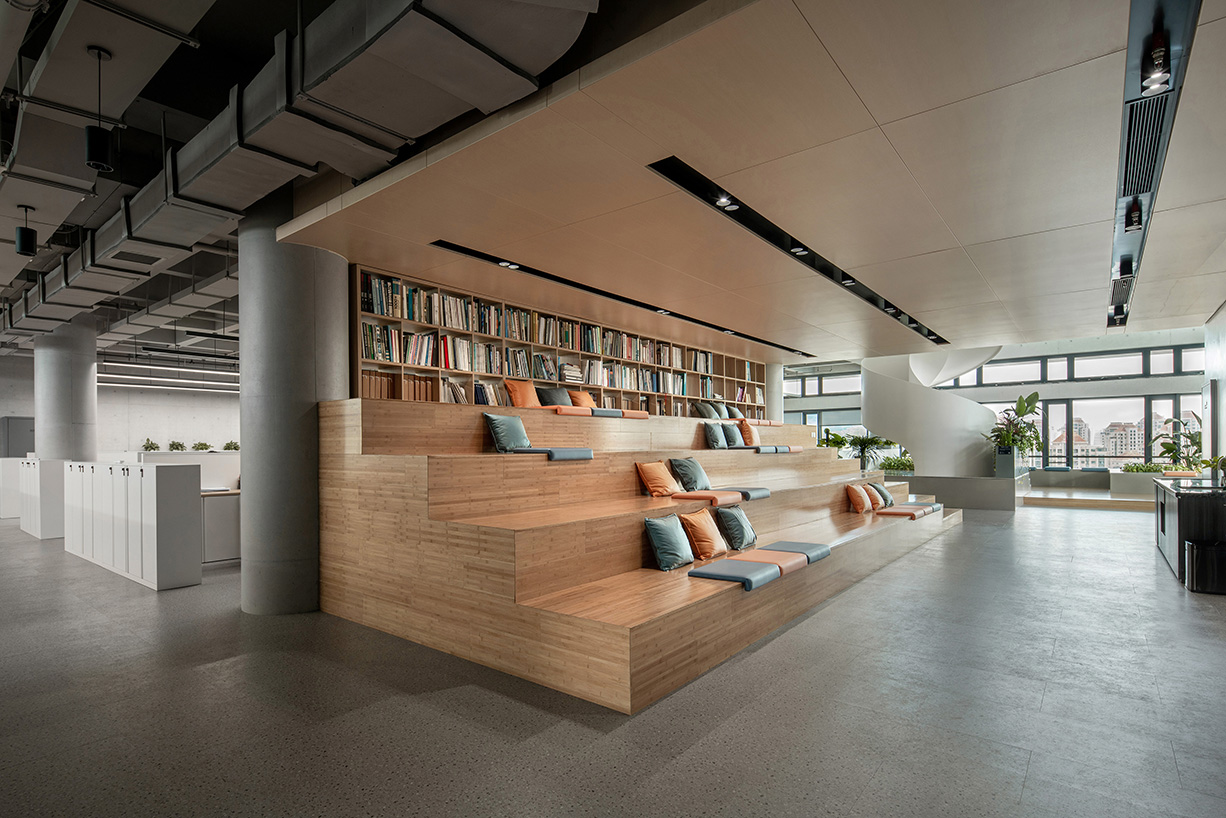
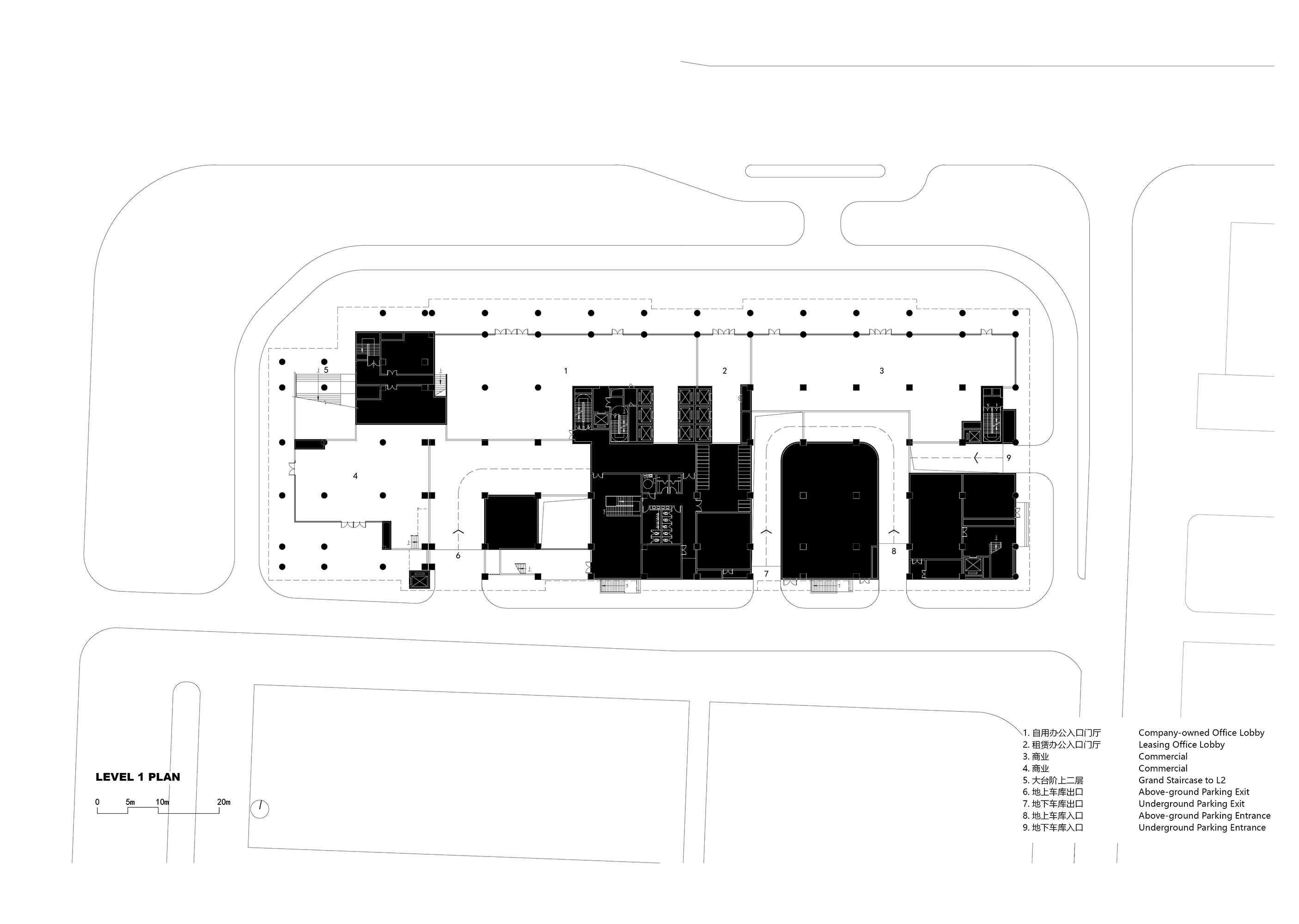
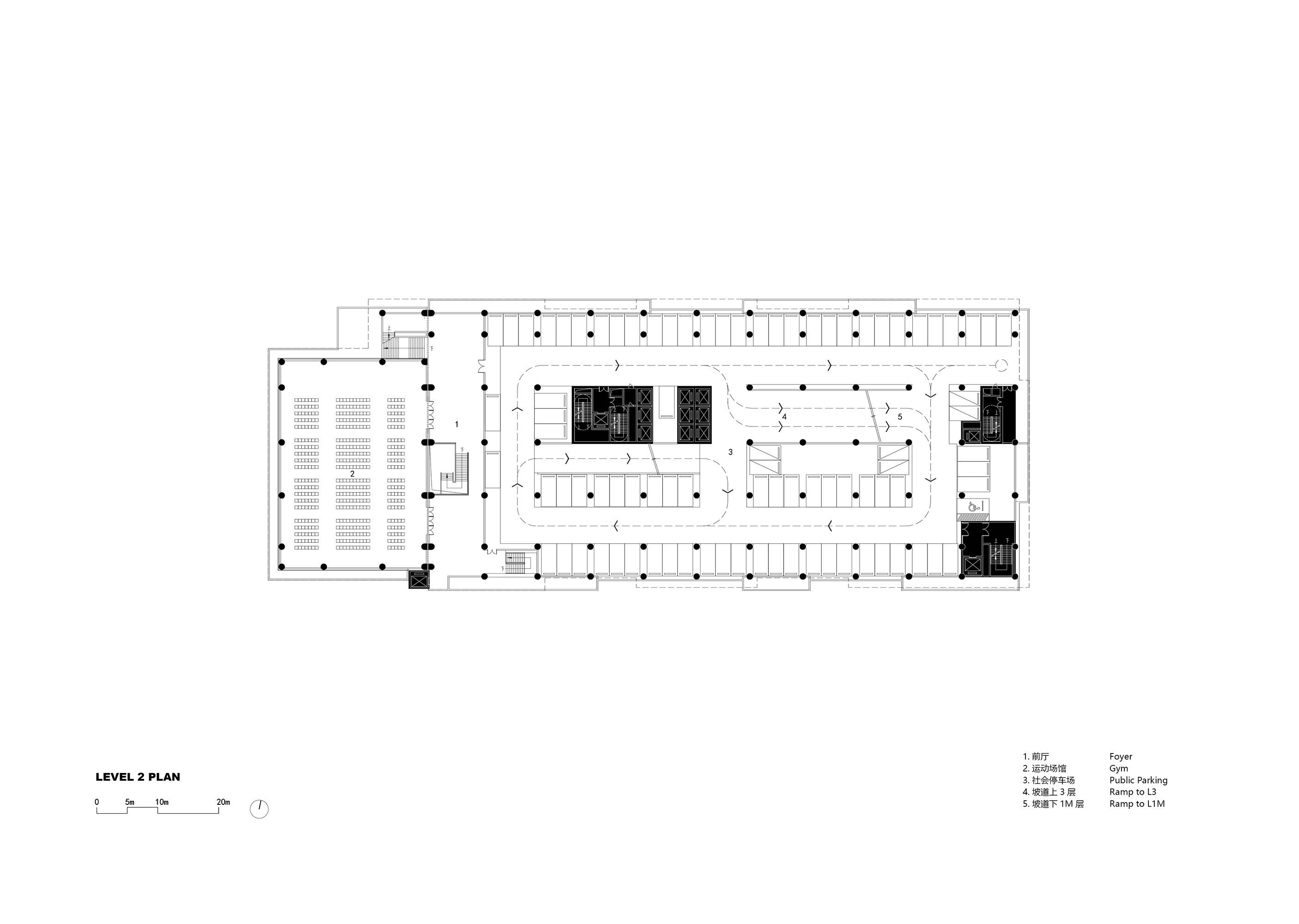
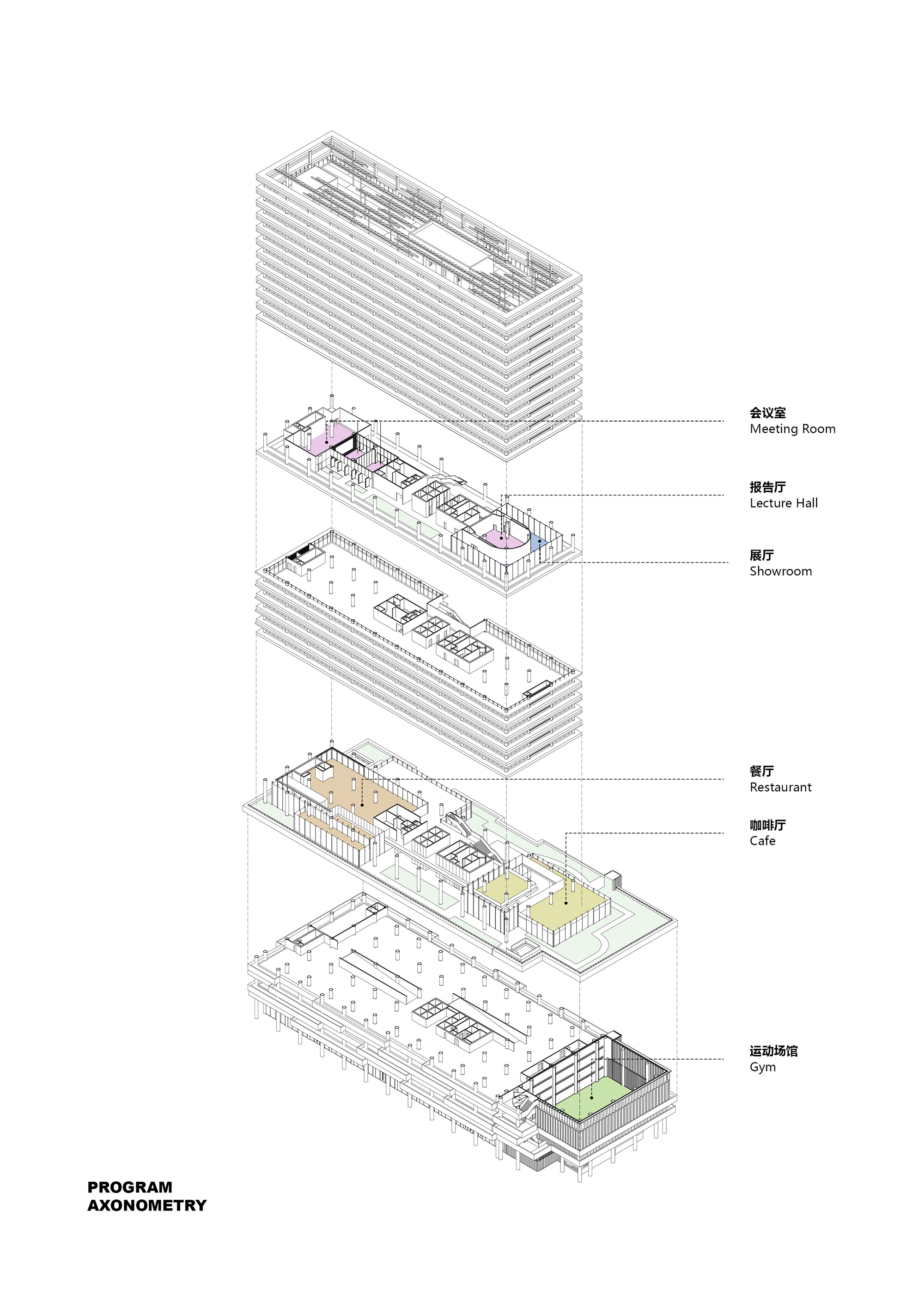
stack vertically: public parking, rental offices, and the institute’s
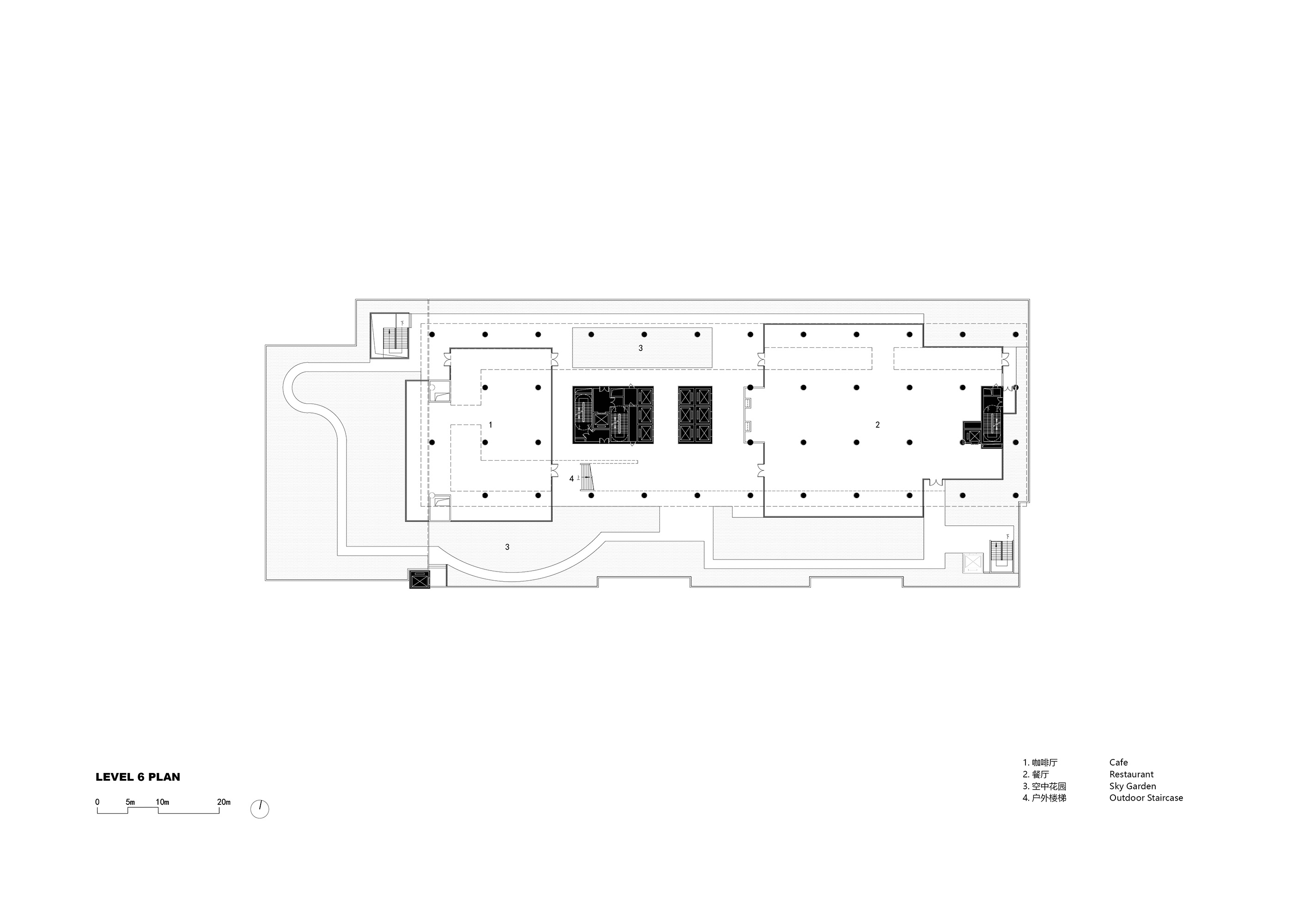
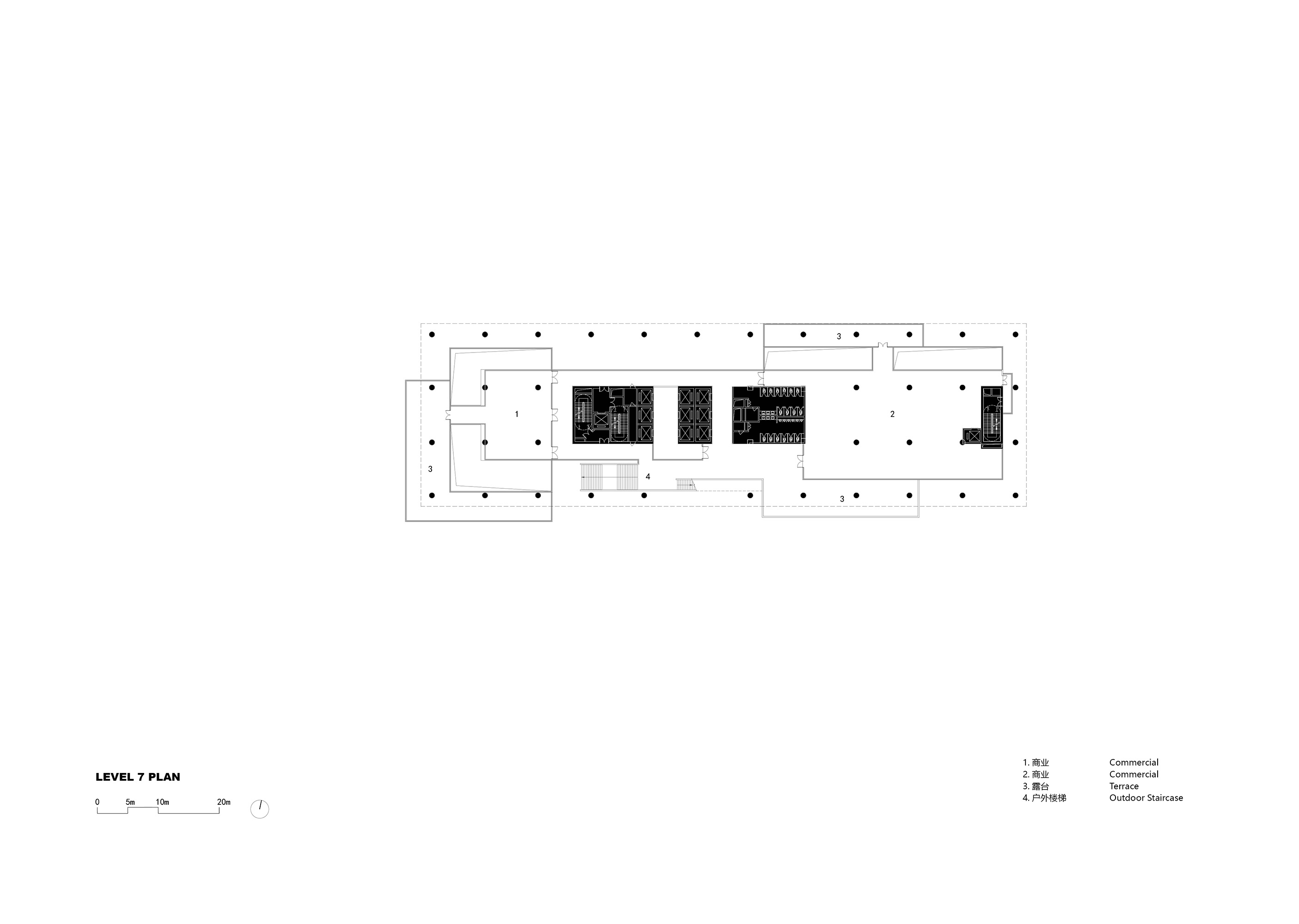
headquarters. Interstitial floors house shared facilities—dining halls, cafes,
gyms, conference rooms, and exhibition spaces—creating "breathing"
platforms for relaxation.
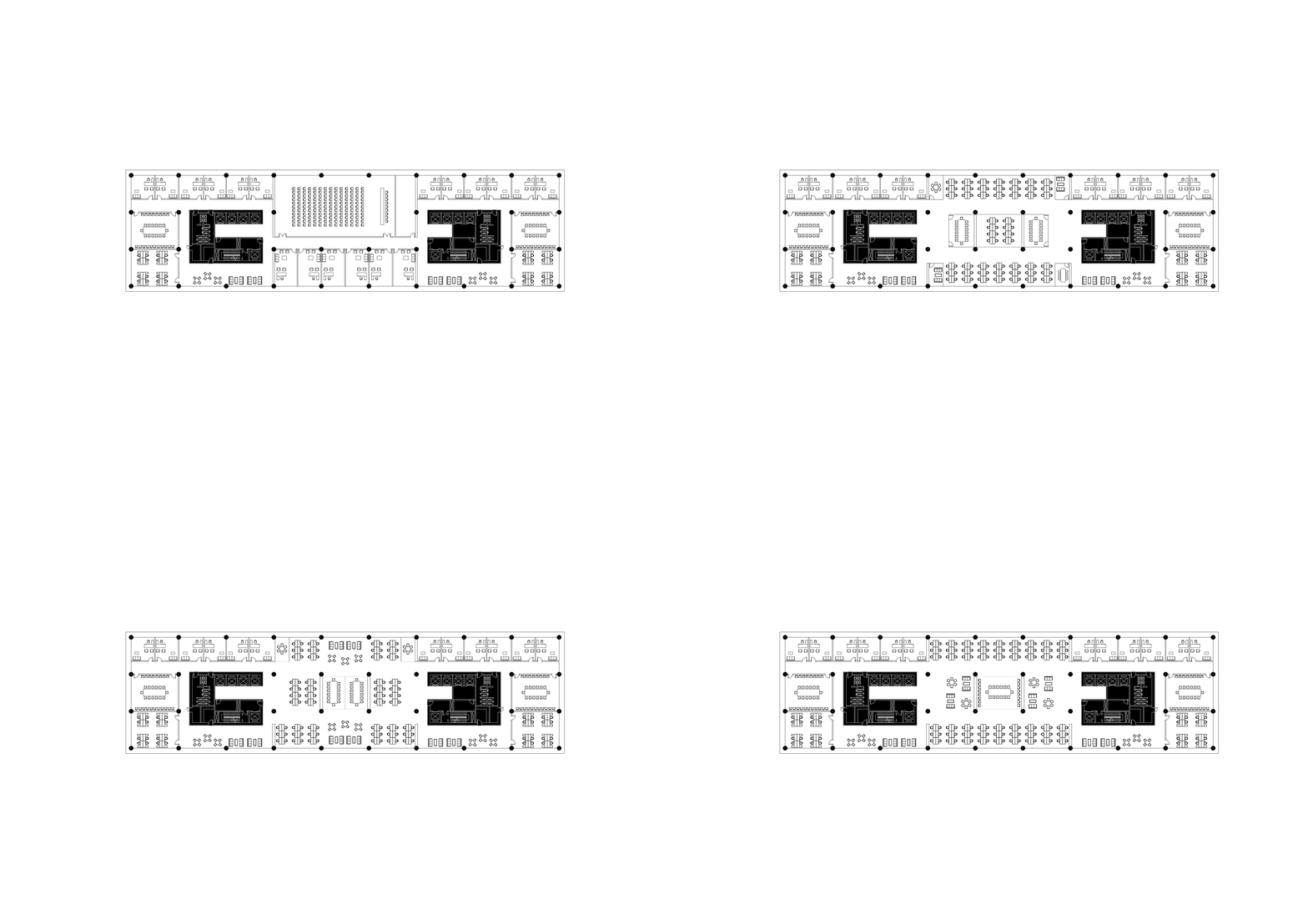
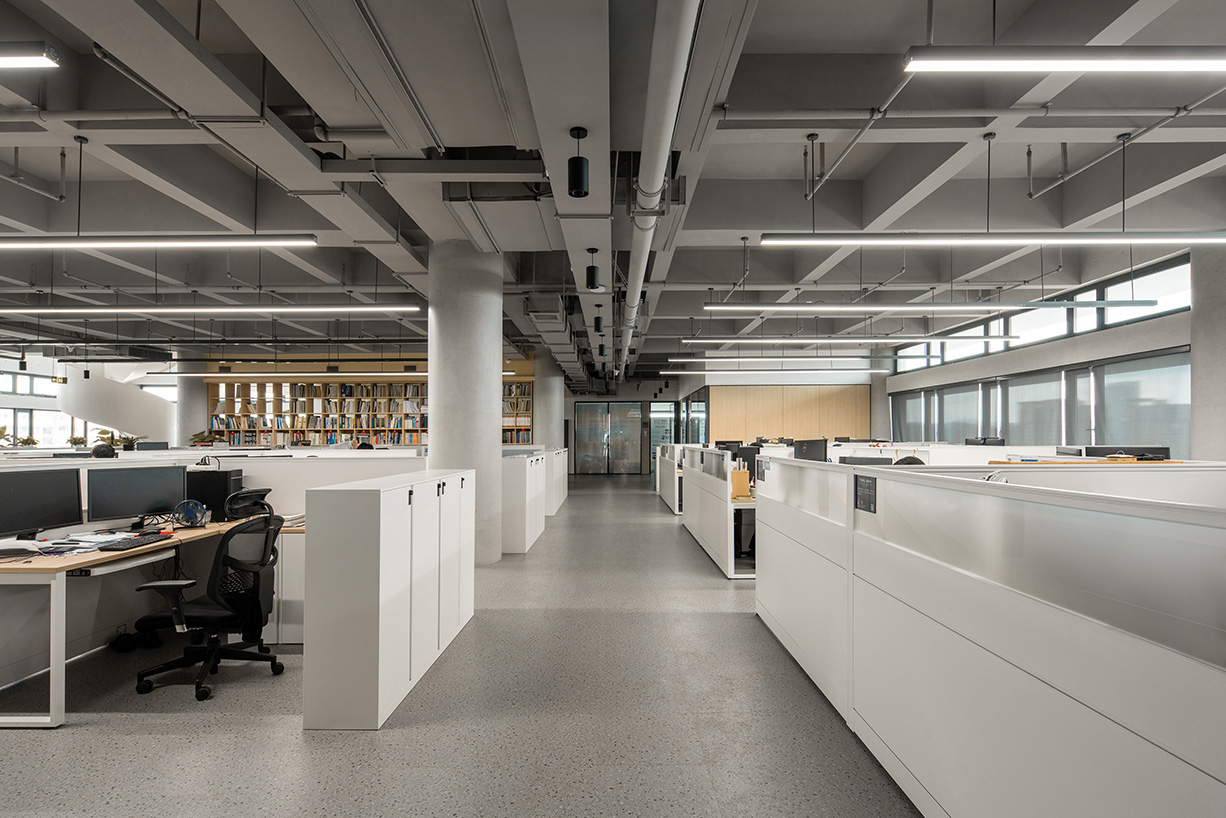
In
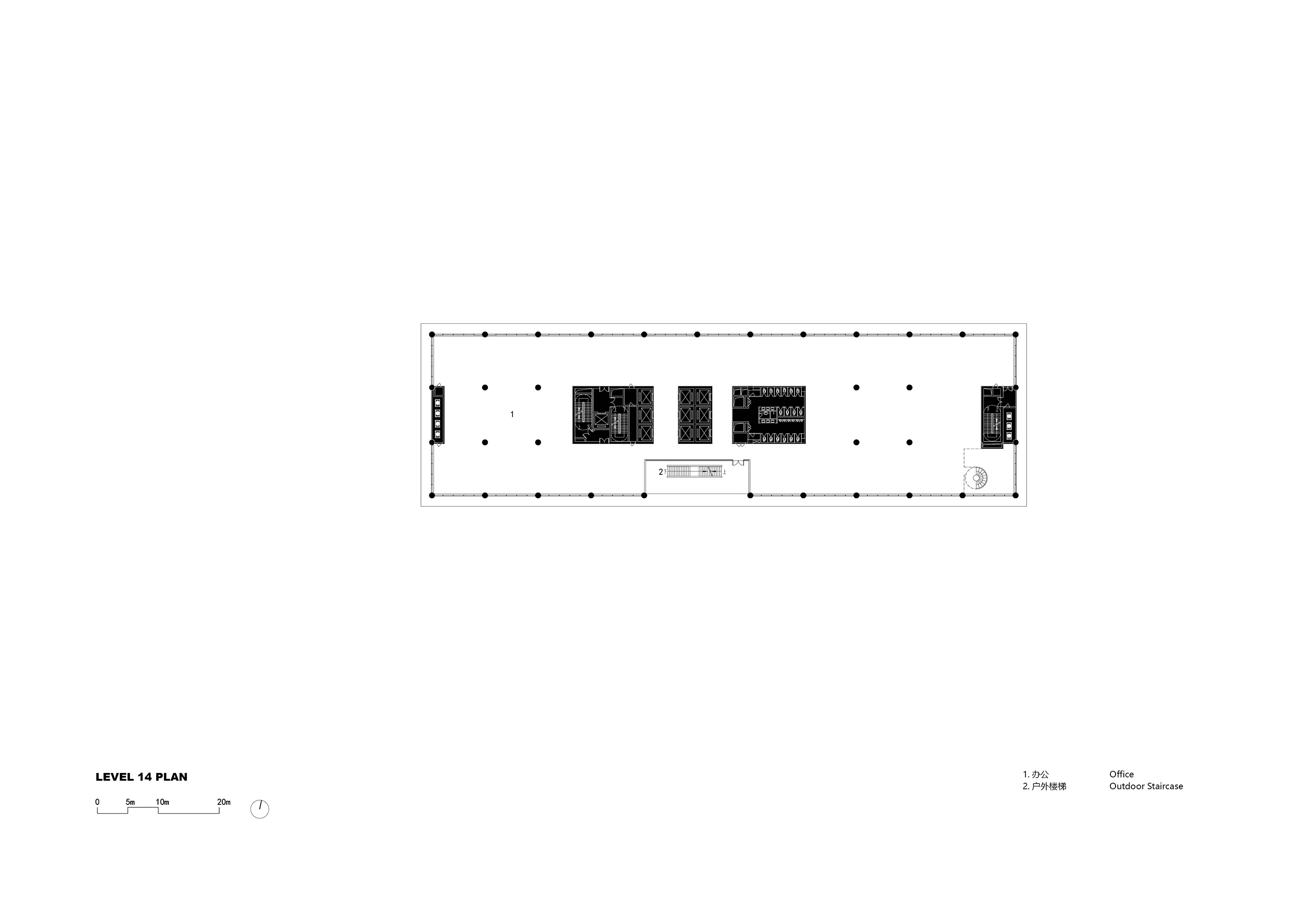
the initial design, dual core tubes enhance structural stability, segregate
rental and self-use zones, and reduce circulation loads. Between the cores,
unobstructed north-south office spaces maximize flexibility, while perimeter
areas accommodate enclosed rooms. Though the original concept evolved, the
final 26m × 96m standard floors allow adaptable layouts for diverse tenant
needs, enriched by double-height communal voids.
Horizontal
Lines as Regional Response
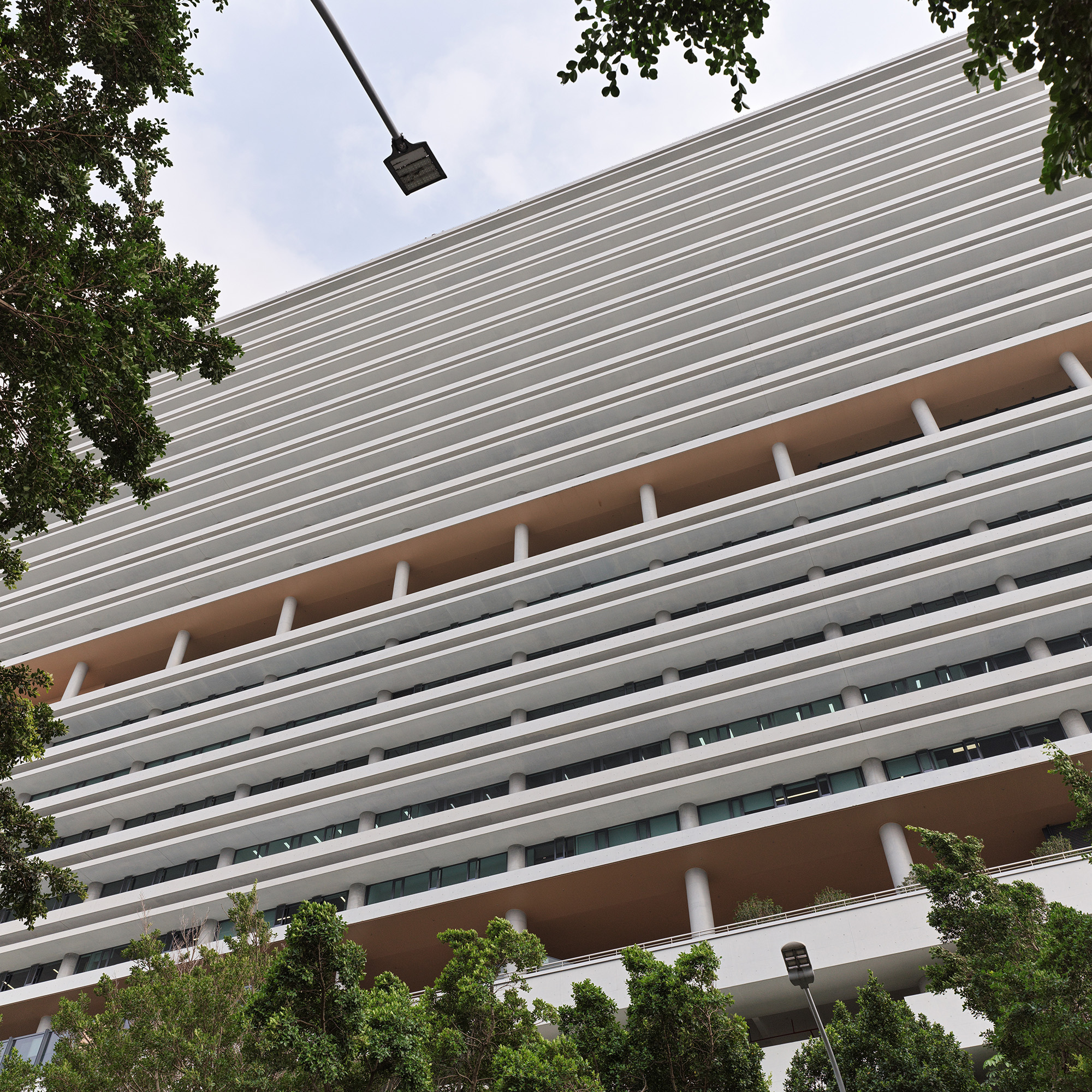
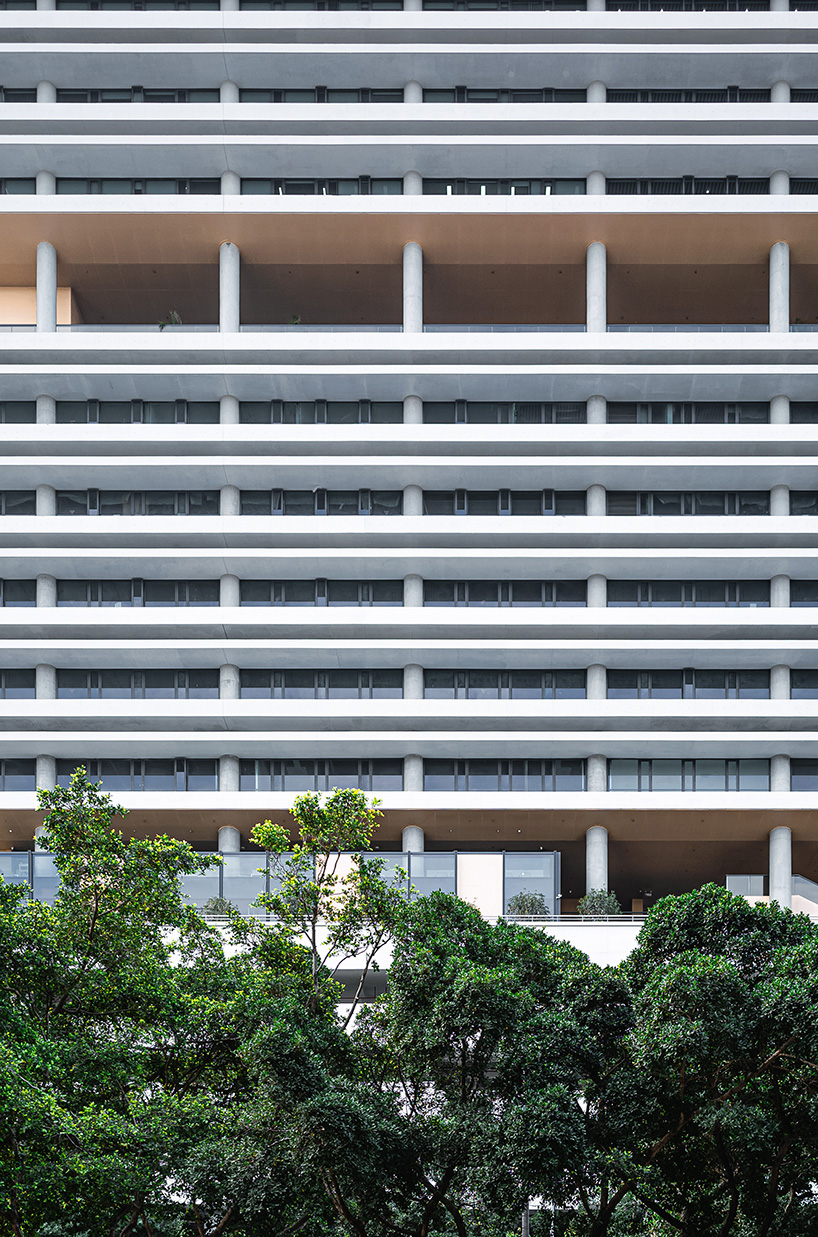
Zhuhai’s
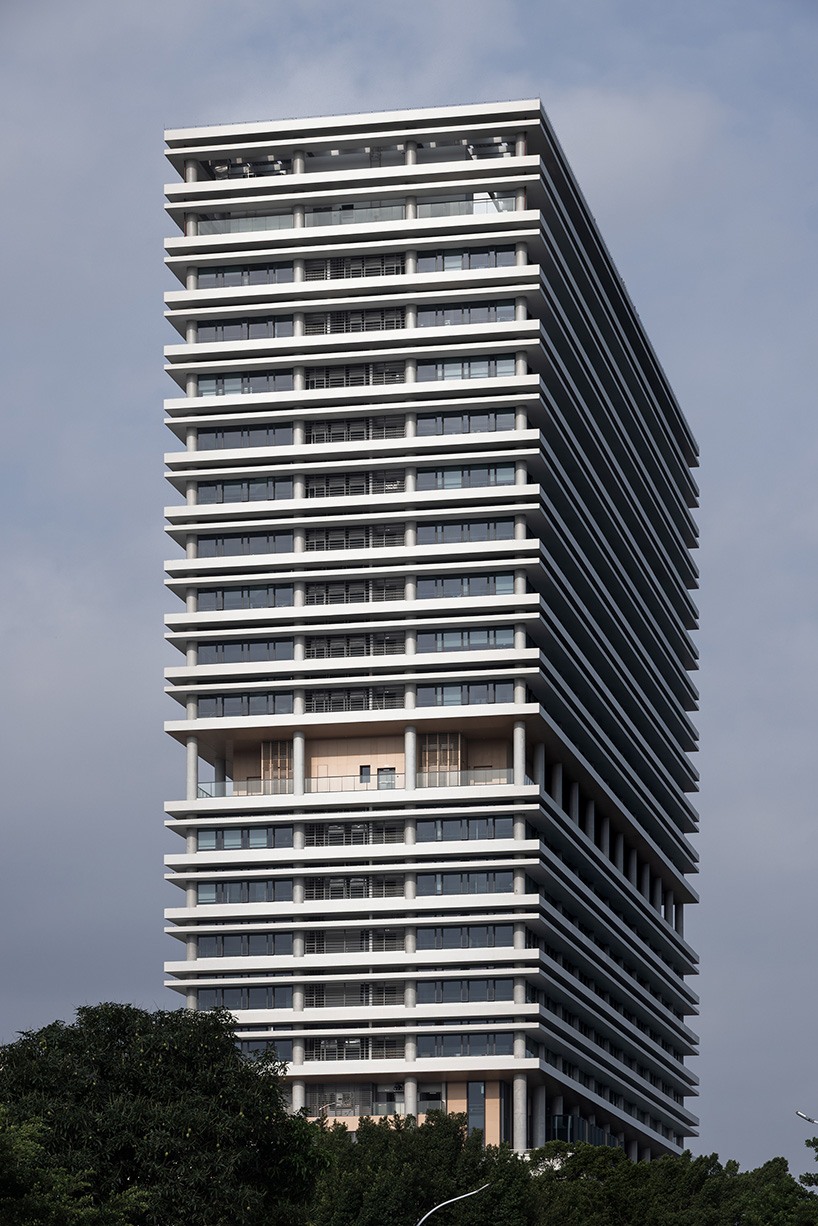
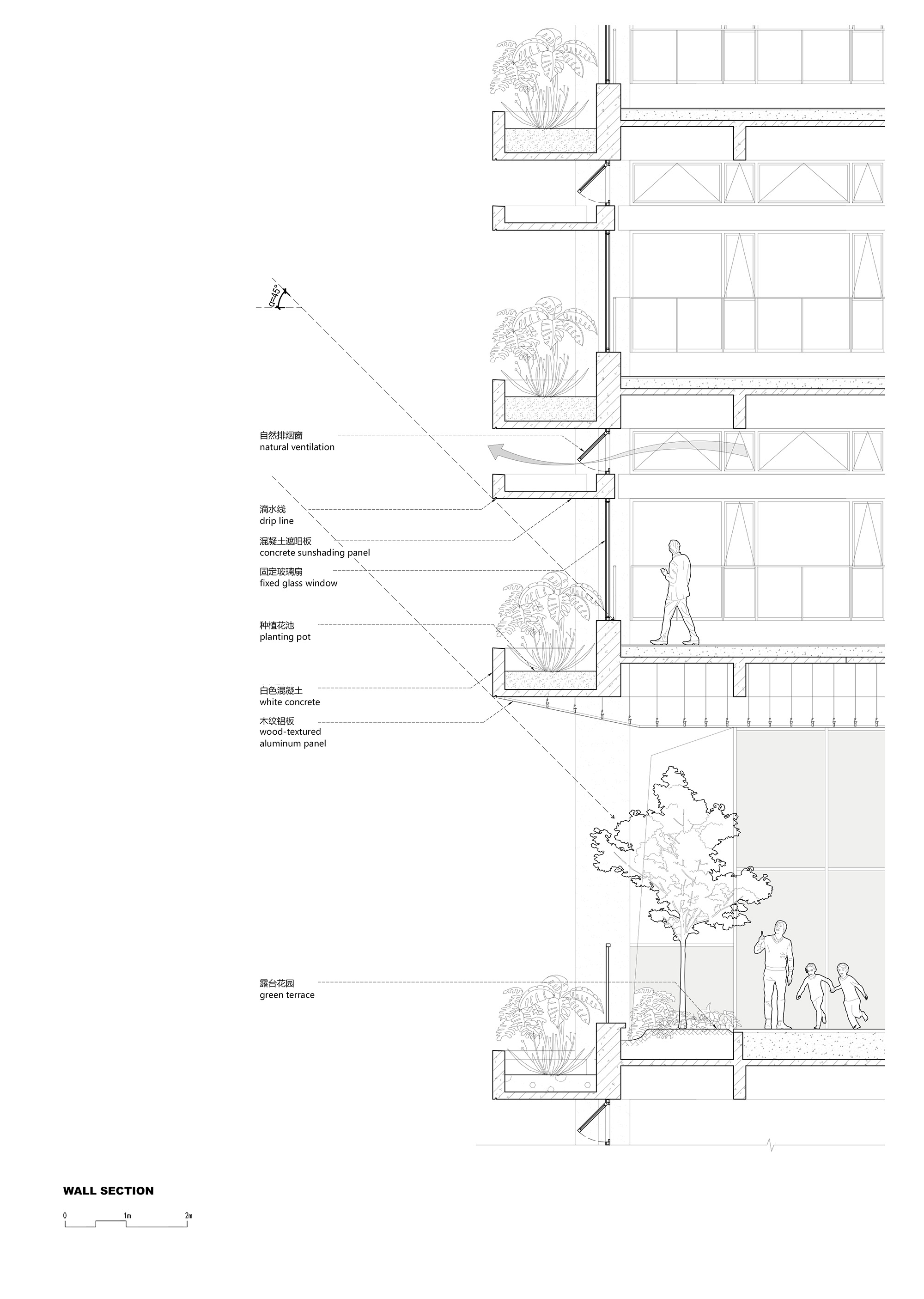
intense sunlight inspired 1.7m-deep concrete sunshades—a façade-defining
element that conceals windows in shadow and enables passive cooling. These
rhythmic horizontal bands create sculptural depth while serving functional and
aesthetic purposes.
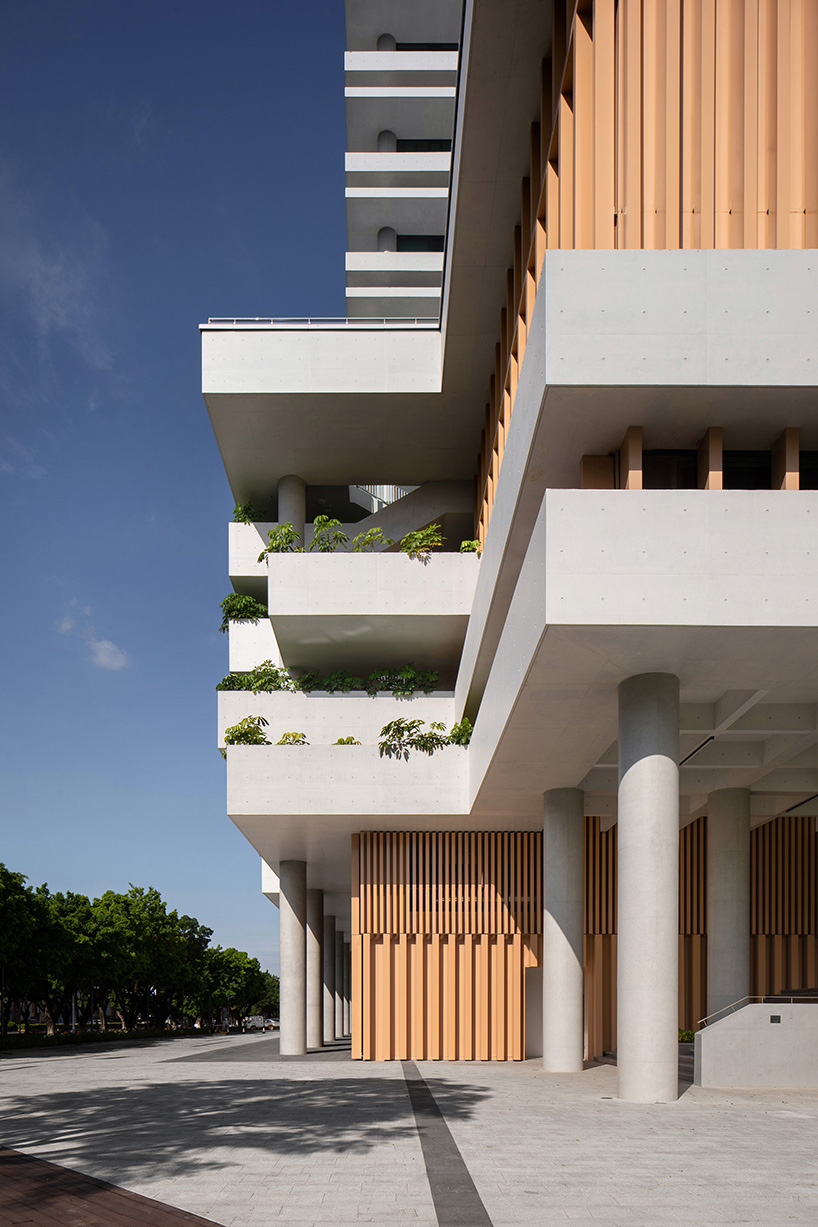
The
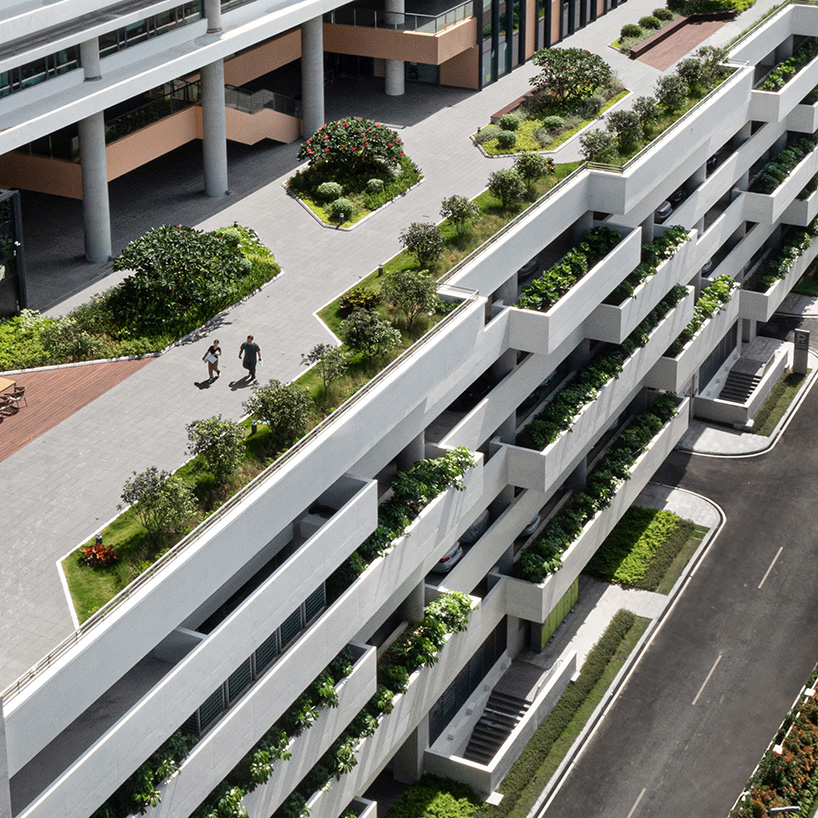
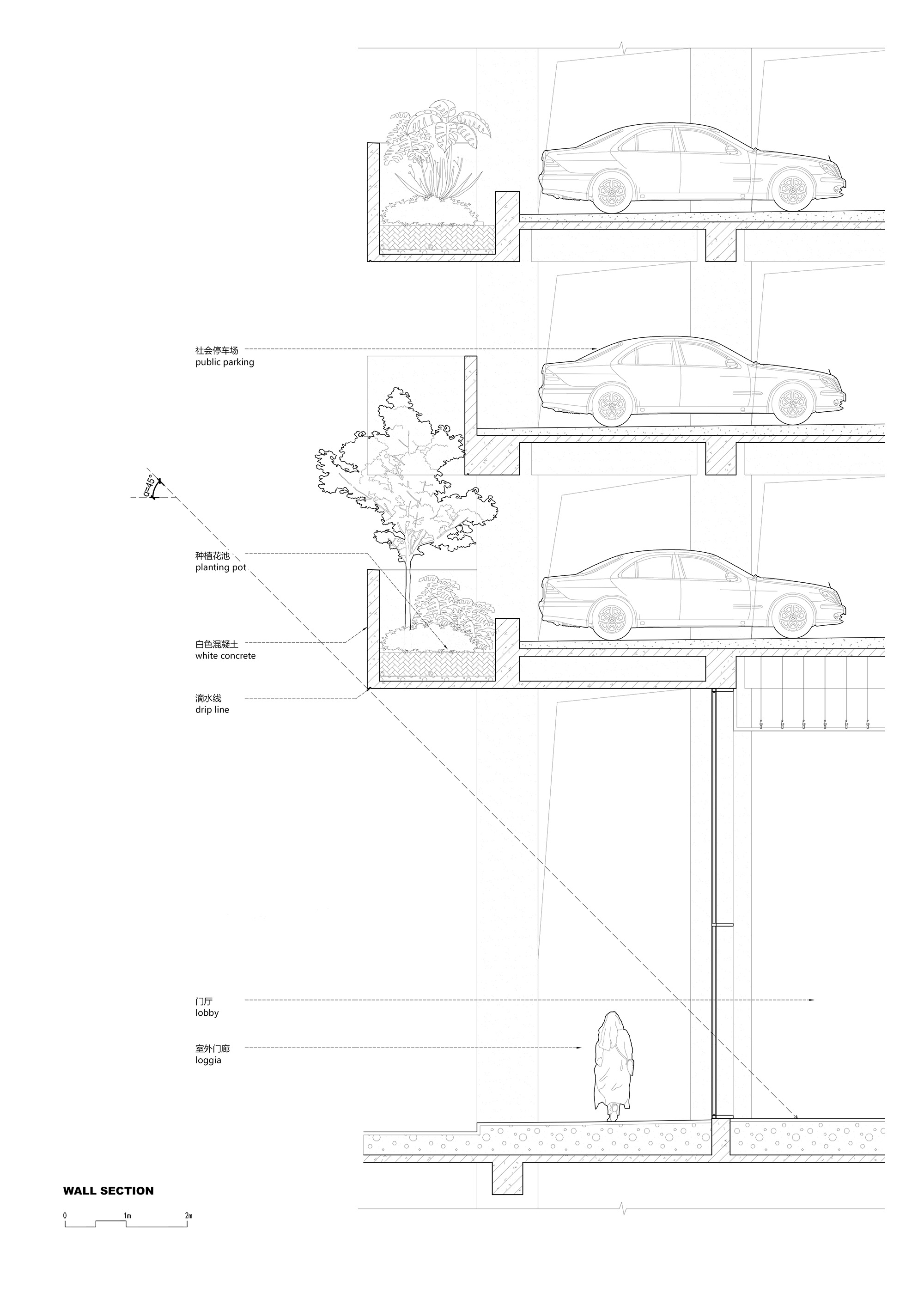
podium, housing a municipal parking garage, faces conflicting contexts: urban
streets to the north and a school to the south. To soften its bulk, horizontal
sunshades morph into staggered planters supporting diverse vegetation, creating
rich shading effects. The resulting vertical garden masks the parking function,
offering students a living green facade instead of a monotonous structure.
While
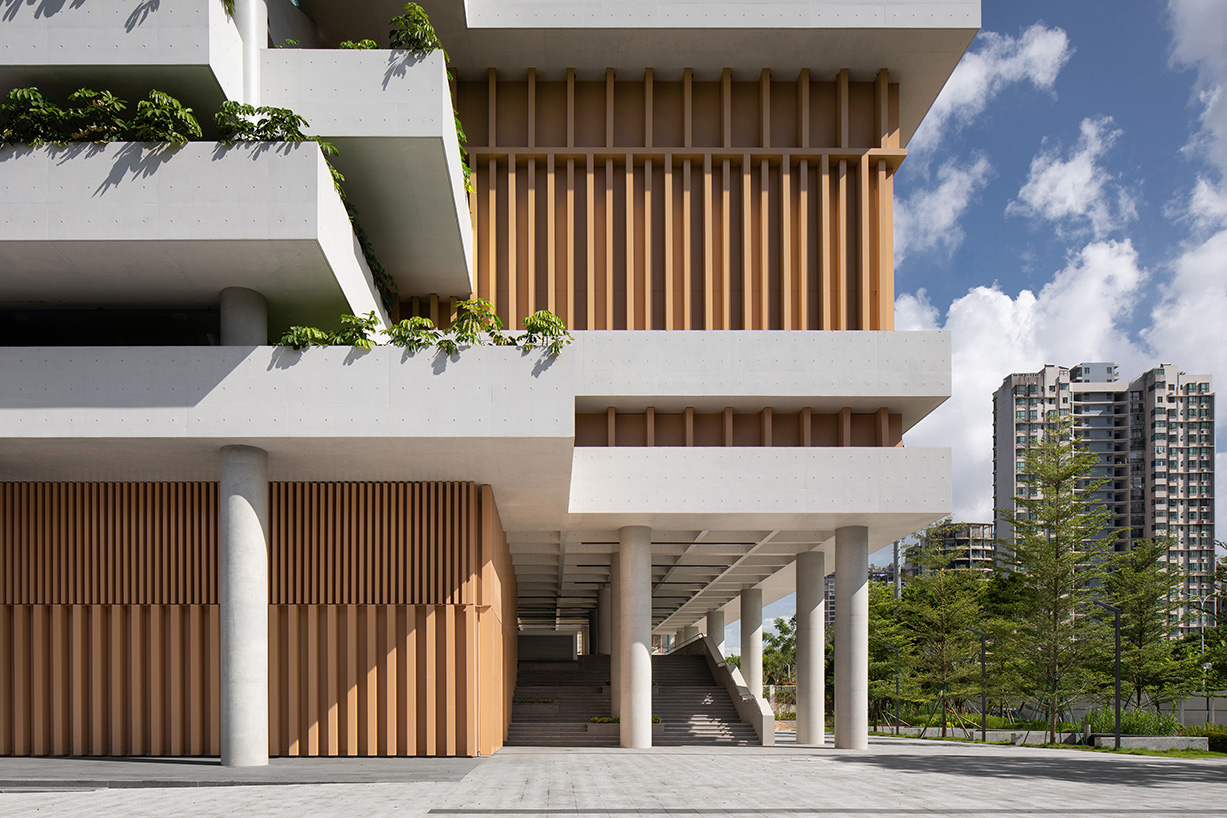
horizontality dominates, verticality is not suppressed. Exposed gray fair-faced
concrete columns contrast with white horizontal bands, adding layered
complexity without compromising the primary design language.
Architecture
as Direct Urban Dialogue
Can a
"modest" building positively impact a city? During the competition
phase, one juror dismissed the design as "factory-like." Yet upon
completion, it has become an uncontested landmark in Xiangzhou—not by chasing
iconicity, but by prioritizing contextual responsibility. We measure success
not by symbolic status, but by enduring contributions to urban life. This
project, we believe, will serve Zhuhai as a catalyst for regional development
and quality of life for decades.



DRAWINGS


PROJECT INFO
Completion Year: 2024
Built Area (m2 or sqft): 81,390m2
Project Location: Zhuhai, China
Design Team: Wang Jianling, Hou Chaoyang, Pan Yiming, Li Mingjing, Hu Lanqing
Photographer: VanWang,PengNiangsi,ZhangHao